
A smoke alarm that keeps beeping needs attention, but the sound does not always mean the same thing. An occasional chirp may indicate a low battery, a fault or an alarm that needs replacing. A repeating emergency alarm requires a different response.
Before changing batteries or pressing buttons, establish whether you are hearing an emergency warning or a maintenance signal.
First: Could It Be an Emergency?
If your alarm sounds an emergency warning, get everyone outside, call 911 from a safe location and stay outside. Do not assume it is a false alarm because you cannot see smoke.
Combination smoke and carbon monoxide alarms can warn of either hazard. Carbon monoxide is invisible and has no smell.
Many residential alarms use these patterns:
- Three loud beeps, followed by a pause and repetition: a smoke warning.
- Four loud beeps, followed by a pause and repetition: a carbon monoxide warning on combination alarms.
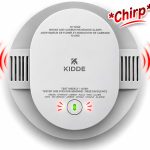
- An occasional short chirp: often a battery, maintenance or replacement warning.
Check your model’s instructions for its exact signals, including voice announcements and indicator lights. Do not delay leaving the home to find a manual during a possible emergency.
1. Make Sure You Have Found the Chirping Device
An intermittent chirp can be surprisingly difficult to locate.
Before removing anything, identify which device is making the sound. A nearby carbon monoxide alarm, security device or an old alarm stored in a cupboard may be responsible.
If several alarms sound together, your system may be interconnected. Consult the instructions for identifying the initiating alarm; indicator lights and alarm-memory features vary by model.
2. Check for a Low or Incorrectly Installed Battery
A low battery is a common reason for an occasional smoke alarm chirp. Hardwired alarms may also have a backup battery that needs attention.
If your model has replaceable batteries:
- Fit fresh batteries of the exact type specified by the manufacturer.
- Check their orientation and make sure they are securely connected.
- Remove any battery pull-tab.
- Close the battery compartment fully.
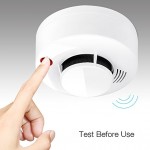
- Test the alarm according to its instructions.
Use rechargeable batteries only if the manufacturer specifically permits them.
Do not try to open or replace the battery in a sealed-battery alarm. Check its instructions to establish whether the warning means the entire unit needs replacing.
3. Check Whether the Smoke Alarm Has Expired
Smoke alarms have a limited service life. Replacing the battery does not renew an aging sensor.
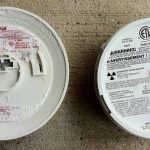
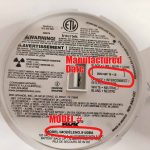
The general recommendation is to replace smoke alarms ten years after manufacture, or sooner if the manufacturer specifies or the alarm fails testing. Check the label and manual for your model’s replacement date.
Carbon monoxide and combination alarms may have different lifespans.
If the alarm gives an end-of-life warning, replace it according to the manufacturer’s instructions. Resetting it or fitting another battery will not extend its intended service life.
4. Clean the Alarm as Directed
Dust, insects and debris can interfere with an alarm and contribute to unwanted warnings.
Follow the cleaning instructions for your particular model. These may specify gently vacuuming the exterior openings with a soft brush attachment.
Do not spray household cleaners into the alarm, paint it or dismantle the sensing chamber. Follow electrical safety instructions before cleaning a hardwired unit, and test the alarm afterward.
If a fault warning continues, contact the manufacturer or replace the unit as directed.
5. Consider Steam, Cooking and Temperature Conditions
Cooking particles, steam and condensation can trigger unwanted alarms. Cold conditions can also affect batteries and contribute to low-battery chirping.
A smoke alarm does not normally sound simply because you have adjusted the thermostat.
Check whether the alarm is installed within its specified operating conditions and at the required distance from cooking appliances, bathrooms and air vents.
Do not move an alarm without checking the manufacturer’s placement instructions and local requirements. If unwanted alarms happen repeatedly, ask the manufacturer or a qualified installer about a suitable solution.
6. Still Beeping After a New Battery?
If a fresh battery has not stopped the chirping:
- Confirm that the sound is coming from that alarm.
- Recheck the specified battery type, installation and compartment closure.
- Read the warning-light and sound-pattern information in the manual.
- Check the alarm’s age.
- Follow the model’s cleaning and reset instructions, if applicable.
There is no single reset procedure that works for every alarm. Some have sealed batteries, different controls or specific activation requirements.
Do not leave the alarm disconnected to stop the noise.
7. When to Contact an Electrician
A hardwired smoke alarm can develop power or wiring problems as well as battery issues.
Use a qualified electrician if the alarm has a suspected electrical fault, repeatedly loses mains power or needs wiring changes. Do not open electrical connections or experiment with interconnection wires to diagnose chirping.
For replacement, check the applicable state and local requirements before changing the alarm’s power source or interconnection method.
Choosing a Replacement Smoke Alarm
Before buying, identify your existing model, its power source and whether it connects to other alarms.
Check manufacturer-approved compatibility. A matching plug or shared brand name does not guarantee that two alarms will work together.
Wireless interconnected alarms are available, but wireless communication and electrical power are separate features. A battery-powered wireless model is not automatically an acceptable replacement for a required hardwired alarm.
Explore our replacement guides and alarm comparisons to help you choose a suitable model.
Keep Your Alarms Ready
Test smoke alarms at least monthly, or more frequently if the manufacturer requires it. Follow the instructions for cleaning, battery changes and replacement.
US Fire Administration guidance recommends smoke alarms inside every bedroom, outside each separate sleeping area and on every level of the home, including the basement.
An occasional chirp deserves prompt attention. Identify the warning and correct the cause so your home has working protection.
As an Amazon Associate I earn from qualifying purchases.



5